


The world of hot drinks has undergone a real revolution, moving from simple boiling to a quest for the perfect temperature. Whether you are a devoted fan of delicate teas, a specialty coffee connoisseur, or you are preparing a bottle for an infant, the precise temperature of the water determines how good your drink turns out. Choosing an adjustable temperature kettle then becomes a decisive step to make every sip shine and to ensure the safety of certain preparations.
From now on, don't settle for water at 100°C for all your infusions. Every variety of tea and every type of coffee reveals its most subtle aromas at a specific temperature. A kettle with a built-in thermostat gives you this essential control, turning a simple daily gesture into a true tasting ritual. We will guide you in choosing an adjustable temperature kettle that meets your expectations precisely.
Why is temperature control essential?
Boiling water is not always the best friend of your hot drinks. For many teas and coffees, a temperature that is too high can "burn" the leaves or beans, releasing an unwanted bitterness and masking the aromatic nuances. Conversely, water that is not hot enough will not allow optimal extraction of the flavors, leaving your drink bland and underdeveloped.
Picture a Japanese green tea, whose delicacy is often compromised by water that is too hot, making it harsh. Or a filter coffee, where water at 92°C perfectly extracts the aromatic compounds without degrading them. The right temperature is the key to a successful tasting experience, allowing each ingredient to express itself fully. It is also a safety guarantee for parents, who can heat water to the ideal temperature for a bottle, avoiding any risk of burns for the child and preserving nutrients.
The key criteria for choosing an adjustable temperature kettle
To make an informed choice and find the ideal appliance, several aspects deserve particular attention. By examining them, you will be able to identify the kettle that will fit perfectly into your daily life and your consumption habits.
Materials: glass, stainless steel or plastic?
The material of your kettle affects not only its look, but also its durability and its impact on the taste of the water. Each option has its own advantages:
- Stainless steel: A popular choice, known for its sturdiness, its resistance to corrosion and its neutral taste. Stainless steel kettles are often elegant and blend well into modern kitchens. They keep heat longer than glass.
- Glass: Offers a sleek design and lets you see the water as it heats, which adds a pleasant visual touch. Borosilicate glass withstands thermal shock and does not transfer any taste to the water. However, it is more fragile than stainless steel and can be hotter to the touch.
- Plastic: Generally lighter and more affordable. It is important to make sure the plastic used is BPA-free (Bisphenol A) to avoid any migration of unwanted substances into the water. Although practical, it can sometimes retain odors or slightly alter the taste of the water over time.
The choice will depend on your priorities: looks, sturdiness, transparency or budget. A stainless steel or glass kettle will generally be a more durable and healthier investment in the long run.
Power and heating speed
A kettle's power, expressed in watts, is a direct indicator of how quickly it heats water. Models generally range between 1,500 and 3,000 watts. Higher power means the water will reach the desired temperature faster, which is a definite advantage on rushed mornings.
For intensive daily use, a kettle of 2,000 watts or more will be appreciated. On the other hand, if speed is not your main criterion, a less powerful model may be enough, with a slight impact on waiting time. Keep in mind that electricity consumption will be proportional to the power and the time of use, but fast heating can paradoxically use less energy overall by reducing running time.
Capacity: for which uses?
The kettle's capacity should match your daily needs. Models generally range from 0.5 liter to 1.7 liters, or even more:
- Small capacity (0.5 to 1 liter): Ideal for one person or a couple, to prepare one or two cups at a time. It is compact and takes up less space on the countertop.
- Medium capacity (1.2 to 1.5 liters): Suits an average family or those who regularly have guests. It lets you prepare several drinks at once without having to fill and heat several times.
- Large capacity (1.7 liters and more): Perfect for large families, offices or occasions when large quantities of hot water are needed.
Heating a quantity of water that is too large for your needs wastes energy. Assess your usual consumption to choose the most suitable size.
Temperature ranges and precision
This is the heart of an adjustable temperature kettle's functionality. Check the range of temperatures offered (often from 40°C to 100°C) and the adjustment steps. Some models offer settings accurate to the degree, while others offer presets in steps of 5 or 10°C.
The best-performing kettles have specific programs for different types of tea (green, white, black, oolong) or for coffee, greatly simplifying use. High precision is particularly appreciated for drinks that need a very specific temperature, such as delicate green tea or preparing bottles.
Ergonomics and additional features
Beyond heating performance, the user experience is shaped by ergonomics and additional options. A comfortable grip, a well-designed spout and intuitive controls are major assets.
- The spout: A precise spout, often of the "gooseneck" type, is essential for fans of filter coffee or pour-over, as it allows perfect control of the water flow.
- The keep-warm function: This option keeps the water at the selected temperature for a set period (often 30 to 60 minutes), so you don't have to reheat it between cups.
- The digital display: An LCD screen shows the current water temperature and makes it easier to select the desired setting.
- Connectivity: Some advanced kettles can be controlled via a mobile app, offering scheduling or remote start options.
- The water level indicator: A clear, visible mark is essential for measuring the amount of water precisely and avoiding boiling dry.
- The 360° rotating base: Lets you place the kettle on its base in any orientation, for easy handling by right-handed and left-handed users alike.
- The limescale filter: A removable filter at the spout catches limescale deposits, ensuring purer water and extending the life of the appliance.
For tea lovers, having a kettle with a thermostat for tea is a real boon, allowing them to reach perfection with every infusion.
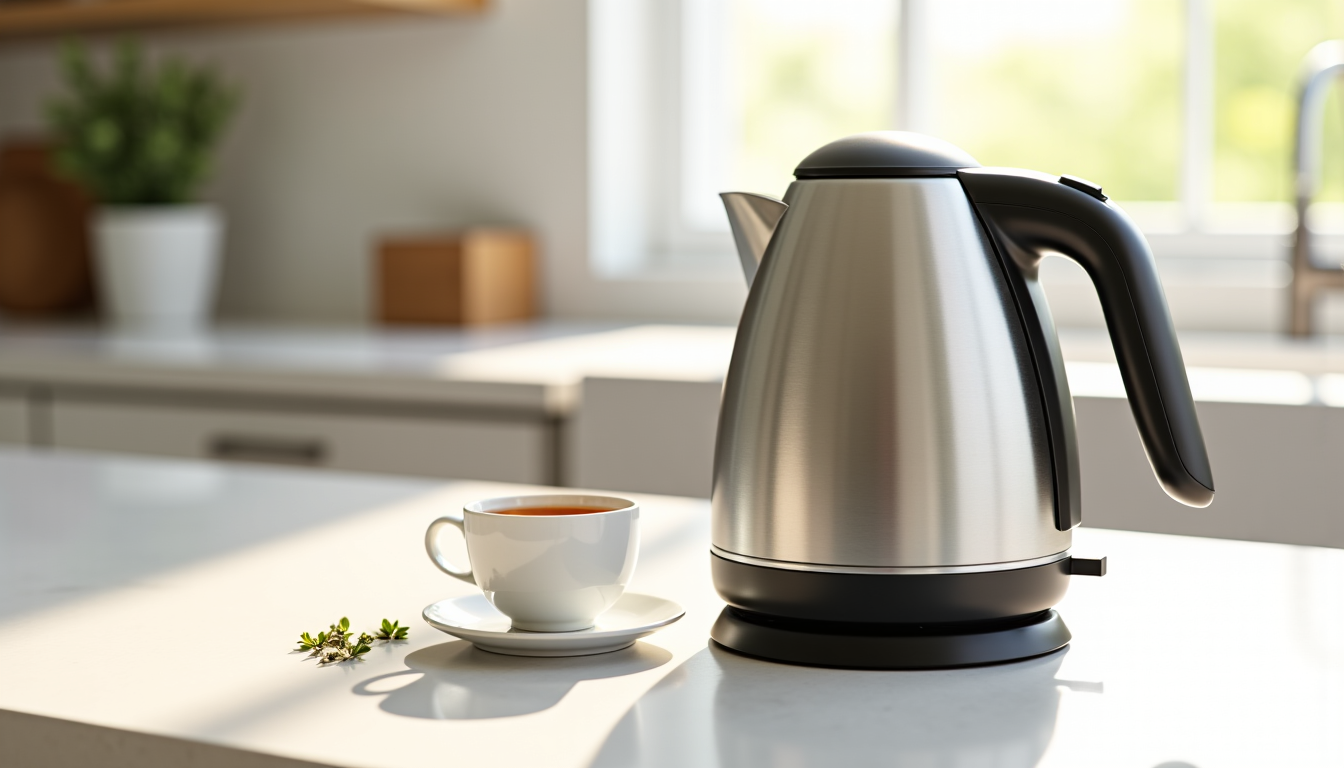
The different types of adjustable temperature kettles
The market offers a variety of kettles, each designed for specific uses. Knowing these distinctions will help you target your search better.
The classic kettle with temperature control
This is the most common model, recognizable by its standard shape and heating base. It is versatile and suits most daily uses, from tea to coffee to instant soups. Its temperature is set with buttons or a dial on the base or the handle.
The gooseneck kettle
Particularly popular with filter coffee fans ("pour-over" methods such as the V60 or the Chemex), the gooseneck kettle stands out for its long, thin spout, curved in an "S" shape. This design allows extremely precise control of the flow and distribution of the water, essential for even coffee extraction. It also comes with adjustable temperature features, offering the best of both worlds to home baristas.
The kettle-teapot
Some models go beyond simply heating water by directly integrating a teapot function. These appliances are often fitted with a removable infuser where you can place your tea leaves. They sometimes offer specific programs for different tea varieties, automatically adjusting the temperature and steeping time. It is an all-in-one solution for tea and herbal infusion enthusiasts. For example, preparing a rosemary herbal tea, whose benefits of rosemary herbal tea are many, becomes child's play with the right temperature.
Maintenance and durability of your appliance
To ensure your kettle lasts and keeps performing at its best, regular maintenance is essential. Limescale is the number one enemy of heating appliances, and kettles are no exception.
Periodic descaling is strongly recommended, especially if you live in an area with hard water. Natural solutions such as white vinegar or diluted citric acid can be used. Simply fill the kettle with the mixture, heat it (without bringing it to a boil at 100°C if you use vinegar) and let it work for a few hours before rinsing thoroughly. Some manufacturers also offer specific descaling products.
In addition, regularly cleaning the outside with a soft, damp cloth helps keep your appliance looking bright. Make sure the limescale filter, if there is one, is also cleaned or replaced according to the manufacturer's recommendations. These simple steps will significantly extend the life of your kettle.
A guide to ideal temperatures for your drinks
To help you master the art of infusion and extraction, here is a summary table of generally recommended temperatures for various drinks. These guidelines are starting points; feel free to adjust them to your personal preferences and the specifics of your products.
| Drink | Ideal temperature | Notes and tips |
|---|---|---|
| Japanese green tea (Sencha, Gyokuro) | 60-75°C | Preserves sweetness and avoids bitterness. |
| Chinese green tea (Longjing, Bi Luo Chun) | 75-80°C | Develops the aromas without burning them. |
| White tea | 70-80°C | Respects the delicacy of the buds. |
| Oolong tea | 85-95°C | Varies with the degree of oxidation (more oxidized = hotter). |
| Black tea | 90-95°C | Releases the richness and robustness of the aromas. |
| Rooibos and herbal teas | 95-100°C | Full extraction of flavors and benefits. |
| Filter coffee (pour-over, Chemex) | 90-96°C | Optimizes extraction without over-extracting. |
| Instant coffee | 85-90°C | Avoids "burning" the powder and altering the taste. |
| Hot chocolate | 80-90°C | Helps the powder or chocolate dissolve. |
| Bottle preparation | 40°C | Safe and comfortable temperature for the infant. |
The benefits of investing in a versatile kettle
Buying an adjustable temperature kettle is much more than simply adding another household appliance. It is an investment in the quality of your moments of relaxation and your cooking habits.
"Precise water temperature is the well-kept secret of great tea masters and baristas. It turns a simple drink into a true sensory experience, revealing all the complexity and subtlety of the aromas."
The benefits of this technology are many and affect several aspects of your daily life:
- Enhanced flavors: By respecting the ideal temperature of each drink, you unlock its full aromatic potential, offering a richer and more nuanced tasting.
- Energy savings: Not needlessly heating water to 100°C for teas that don't need it reduces your electricity consumption.
- Versatility of use: Beyond drinks, water at 40°C is perfect for baker's yeast, water at 60°C for honey, and water at 80°C for certain delicate culinary preparations.
- Comfort and ease: Presets and the digital display simplify use, making it quick and effortless to prepare your drinks.
- Increased safety: Being able to heat water to a precise temperature for bottles removes the guesswork and ensures infants' safety.
Getting the most out of your hot drinks
The quest for the perfect hot drink is a personal adventure, marked by taste discoveries. An adjustable temperature kettle is not just a gadget, but an essential tool that lets you explore this diversity with precision and confidence. It invites you to rediscover your favorite teas and coffees in a new light, while respecting their intrinsic nature.
Whether you are a tea expert, a specialty coffee lover or simply want to improve your daily routine, choosing the right appliance will transform the way you prepare and enjoy your drinks. Take the time to assess your needs, compare features and choose the model that will faithfully accompany you in every cup, for ever-renewed moments of pleasure.
Spotted a mistake or outdated information? Let us know, we check every report.


